
Welcome to TerraMakers
by Jan Mestan
Exploring the Chthonian Planet Earth—advancing physics through geophysical research, publications, public lectures, and expanding Earth globes modeling. AI is not our enemy.
Following the footsteps of science's independent giants... classifying Earth as a Chthonian planet since 2018.
Jan Mestan
Jan Mestan is a Prague-based innovator and science communicator with a background in geology, physics, and geophysics, known for pioneering new models of Earth's dynamics and challenging conventional tectonic theories.
Jan Mestan, born in 1991, is an innovator and science communicator currently based in Prague. He has a diverse academic and professional background in geology, applied physics, and tectonics, which enables him to blend scientific inquiry with creative exploration, particularly in the fields of geoscience and astronomy. In addition, he brings valuable practical experience from areas such as airport operations, highway construction, and administration.
Jan earned a Bachelor's degree in Geology from Charles University in Prague, with a focus on hydrogeology, engineering geology, and applied geophysics. He continued his studies in applied physics at the Technical University of Ostrava and in geophysics at Ludwig Maximilian University of Munich, where he was awarded a GFPS scholarship.
In 2004, Jan met Dr. Jean-Pierre Luminet, a renowned astrophysicist known for creating the first visual representation of a black hole. Jean-Pierre is celebrated for his groundbreaking work in cosmology, contributions to understanding the nature of black holes, and research on the structure of the universe. During their meeting, Jan received an award in Paris for his video about the transit of Venus across the Sun, which showcased his early talent in astronomy communication and marked a key milestone in his scientific career. This encounter not only recognized Jan's abilities in visual science communication but also sparked his passion for cosmic exploration and engaging with the scientific community in innovative ways.
Jan won the national final of the Astronomy Olympiad in Czechia in 2007, further confirming his dedication to the field of astronomy. That same year, he received a grant from the European Southern Observatory to visit the VLT facility in Chile. During his studies at the Pisek Grammar School, he completed an internship at the Institute of Geology of the Czech Academy of Sciences, focusing on the laboratory analysis of rocks and minerals from the Kamenne doly quarry near Pisek, specifically working with polarizing microscopy and electron microprobe analysis. He won second place in the The Czech Junior Brains Award competition in the GENUS category, receiving the Veolia Water Award. Over seventy entries competed for prizes totaling 130,000 CZK, with three finalists in each category defending their projects before a jury of renowned Czech scientists.
In the years that followed, his scientific contributions continued to gain recognition. In 2014, he received a student travel grant from the American Geophysical Union. His academic achievements were further acknowledged in 2015, when he was awarded the Seismik Prize for the best bachelor's and master's thesis in theoretical and applied geophysics. In 2017, he received a Bayhost scholarship from the Bavarian Ministry of Education, and in 2019, a scholarship from the Chinese government.
Jan's research interests span a wide range of topics, including horizontal tectonic movements in North America, passive seismic methods for aircraft landing monitoring, seismic source modeling for subsurface exploration, U-Th-Pb dating in monazite mineralization zones, and density variations in quartz as a key to understanding impact-related structures based on the Rajlich's hypothesis. His scientific work includes peer-reviewed journal articles, a final university thesis, a book chapter, and numerous presentations at international conferences that bridge traditional geophysics with scientific modeling.
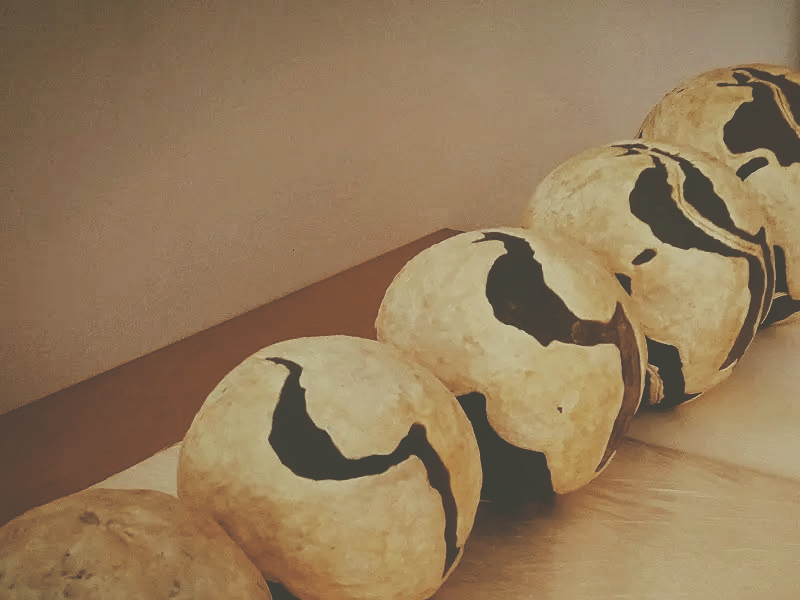
Currently, Jan focuses on promoting the concept of the Expanding Earth. He designs and produces custom EVOGLOBES—models that offer a visually engaging way to understand Earth's dynamic evolution and challenge traditional plate tectonic theory. These models are available to scientific institutions, educators, universities, corporations, and individuals interested in innovative educational tools and scientific models. By purchasing EVOGLOBES, customers support the exploration and dissemination of new scientific ideas while acquiring a unique educational resource. EVOGLOBES by Jan are complemented by celestial drawings such as Cosmic Art by Bogdana, which we also offer. These artworks aim to capture the diversity and vibrant colors of the universe's complexity.
Jan can be contacted at info@terramakers.com, and more information about his academic background is available on his ORCID profile: https://orcid.org/0000-0003-3918-660X. Or alternatively visit Google Scholar, Semantic Scholar or Linkedin.
Jan was inducted into the Czech Astronomical Society Hall of Fame.
THE MILESTONES
IMPORTANT YEARS
Earth as a Chthonian Planet
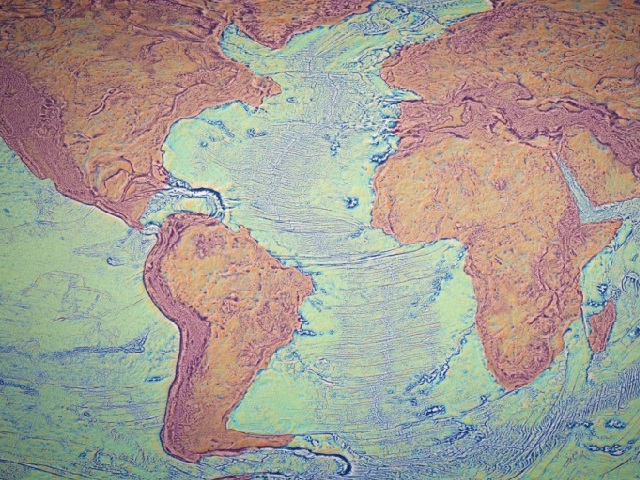
In 2018, at the FameLab competition in Prague, Czechia, Jan Mestan presented the idea that Earth is a chthonian planet, accompanied by a demonstration of the shape similarity between the continental margins of Zealandia and South America.
First Prototype of EVOGLOBES
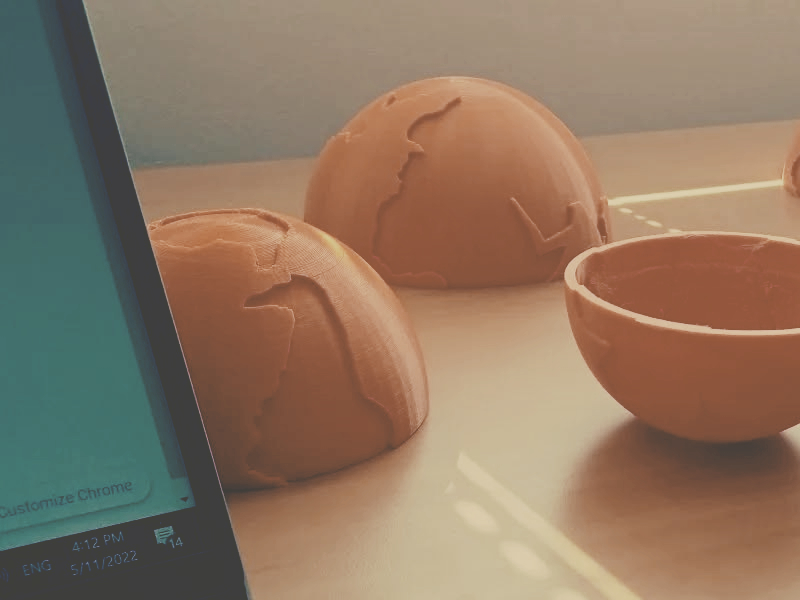
In 2023, Jan Mestan created the first prototype of the expanding Earth model, named EVOGLOBES. For the first time, such a model incorporates innovative 3D modeling techniques and computer processing of cutting-edge satellite data.
First Publication
The first comprehensive publication by Jan Mestan, titled Revisiting GPS-Derived Plate Kinematics: Evaluation of the Integration of Plate Motion Models in Terrestrial Reference Frames, demonstrates that plate motions described by plate tectonic theory are not valid.
Chthonian Earth
The Earth is a physical system, governed by the same laws that apply throughout the universe. It stands as a unique space laboratory for studying the formation and behavior of extraordinarily condensed, ultra-viscous materials.
Chthonian planets are a theoretical class of exoplanets: extremely dense, rocky bodies thought to be the remnants of gas giants that have been stripped of their atmospheres by intense stellar radiation. The term was introduced in a 2004 paper by G. Hebrard et al., who proposed that such planetary cores could remain after the evaporation of hot Jupiters.
In 2018, Jan Mestan was the first to formulate the idea that Earth itself might be a chthonian planet. Given their expected tendency to relax and expand after losing their outer layers, Jan explores the hypothesis of Earth's expansion through two main approaches: modeling the ancient geological configurations of the planet and analyzing modern satellite geodetic data that appear to carry signatures of global expansion.
The first independent publication to acknowledge that Jan Mestan was the originator of the idea that Earth is a chthonian planet is a 2023 paper by chemical engineer Richard Cronin, who explicitly cites: 'With the loss of the initial proto-atmosphere to provide a rocky planet, Earth is best described as a Chthonian planet (Mestan, 4).'
In our analyses of early planetary evolution, we often adopt the traditional term gas giant to describe any planet significantly more massive than Earth that possesses a substantial gaseous envelope susceptible to photoevaporation. While recent modern astronomical terminology often distinguishes between gas giants and ice giants based on chemical composition, our use of the term encompasses envelopes that may contain significant amounts of water vapor and other volatiles in addition to hydrogen and helium.
Among our greatest achievements is being the first to demonstrate a direct connection between Zealandia and South America—we have critically examined the foundations of plate tectonics and identified fundamental reasons why the plate motions it predicts do not, in fact, occur. We introduced a fundamental relation describing the expansion of chthonian planets and proposed a viscoelastic parameter that governs how such planets evolve over time—understanding this parameter is essential for reconstructing the geological history of the Earth and other rocky worlds. Our ongoing work explores the size of the Earth at the moment of its formation, inferred from the dynamics of the Earth–Moon system and from the nature of Fermi-energy reservoirs deep within the planet's interior. We ask bold questions: are chthonian planets a form of Quantum Jammed Structure (QJS)? Is the Earth one of them? And what are the effective viscosities and elastic moduli that govern the behavior of such planetary materials?
Publications
READ OUR PUBLICATIONS
Measuring Earth's Expansion Using GPS Technology
The paper will examine methods for measuring Earth’s expansion using GPS technology. It will explore how precise geodetic data can detect changes in the planet’s size and shape. It will also discuss the implications of these measurements for understanding geophysical processes and Earth's long-term dynamics.
Area: Applied Physics, Geodesy
Author: Jan Mestan, TerraMakers
Measuring Earth's Expansion Through Gravimetric Observations
The paper will examine methods for measuring Earth’s expansion through gravimetric observations. It will explore how variations in gravity can reveal changes in the planet’s structure and size. It will also discuss the implications of these findings for understanding geophysical and planetary dynamics.
Area: Applied Physics, Geophysics
Author: Jan Mestan, TerraMakers
Measuring Earth's Expansion via Rotational Dynamics
The paper will examine how Earth’s expansion can be measured through its rotational dynamics. It will explore the relationship between changes in rotation and variations in the planet’s structure and mass distribution. It will also discuss the implications of these observations for understanding geophysical processes and planetary evolution.
Area: Applied Physics, Geophysics
Author: Jan Mestan, TerraMakers
Integrating Artificial Intelligence and 3D Rapid Prototyping in Modeling Earth’s Expansion
The paper will examine modeling Earth’s expansion using 3D rapid prototyping techniques. It will explore how physical models can simulate changes in planetary structure and dynamics. It will also discuss the insights these models provide into geophysical processes and Earth’s long-term evolution. In addition, artificial intelligence methods will be incorporated to analyze and compare synthetic expansion scenarios with geological and geophysical data from the present-day Earth. Through AI-assisted modeling and comparative analysis, conclusions will be drawn regarding the plausibility of Earth expansion hypotheses and their consistency with observed planetary structures and dynamics.
Area: Experimental Geoscience
Author: Jan Mestan, TerraMakers
Geological Aspects of Earth's Expansion
The paper will examine the geological aspects of Earth’s expansion. It will explore how tectonics, rock formations, and crustal processes reflect changes in the planet’s size and structure. It will also discuss the implications of these geological observations for understanding Earth’s long-term evolution.
Area: Geology
Author: Jan Mestan, TerraMakers
Understanding Earth–Moon Angular Momentum through a Chthonian Earth Framework
This paper will examine the distribution of angular momentum in the Earth–Moon system, in which approximately 80% is associated with the Moon’s orbital motion and 20% with Earth’s rotation. It will explore a model in which the early Earth was a massive gas giant—a chthonian proto-Earth—that gradually lost a substantial fraction of its mass. The study will show how this early mass loss and redistribution could influence the present angular momentum balance between Earth and Moon. This framework will provide a novel perspective on the formation and rotational dynamics of the Earth–Moon system, highlighting the importance of initial planetary mass and internal structure in shaping long-term orbital and rotational characteristics.
Area: Theoretical Astrophysics
Author: Jan Mestan, TerraMakers
Evidence for Higher Bulk Densities in Younger Earth-Mass Exoplanets: A Statistical Study of Terrestrial-Mass Worlds Inside 2 AU
This study will examine the relationship between planetary age and bulk density for a sample of terrestrial exoplanets in the 0.5–2.0 M⊕ range orbiting within 2 AU. Our statistical analysis is expected to reveal a trend where younger planets exhibit significantly higher densities compared to their older counterparts. We hypothesize that this is driven by the fact that these younger planets are significantly often stripped gas or ice giant cores—chthonian planets. As such, they remain in an unrelaxed, highly compressed state following the rapid loss of their massive envelopes, whereas older planets have already undergone partial or full structural relaxation, leading to a decrease in their bulk density over time.
Area: Astrophysics
Author: Jan Mestan, TerraMakers
On the Physical Infeasibility of Subduction: Why Oceanic Plates Must Stall at Continental Margins
This study will propose an investigation into the physical feasibility of subduction at oceanic–continental margins within the framework of plate tectonics. The proposed analysis will examine force balance, buoyancy contrasts, frictional resistance, and lithospheric rheology to evaluate whether sustained subduction is mechanically plausible under realistic conditions. The anticipated results aim to clarify whether oceanic plates can plunge beneath continents at continental margins or whether mechanical stalling constitutes an inherent constraint of the model.
Area: Geomechanics
Author: Jan Mestan, TerraMakers
Quantum Jammed Structures in the Ultra-Dense Cores of Former Giant Planets
We investigate the hypothesis that the following mechanism may operate within the ultra-dense interiors of planetary remnants. This framework attempts to connect microscopic quantum processes with macroscopic physical behavior.
At sufficiently high densities in the cores of former giant planets, the wave functions of constituent particles strongly overlap, and the system enters a regime influenced by collective (quasi-)many-body quantum effects. Rather than behaving as independent quasiparticles described by a simple Fermi liquid picture, the strongly interacting system may approach a regime analogous to (quasi-)many-body localization, in which disorder and interactions inhibit large-scale transport and equilibration.
In such an environment, the possibly amorphous and disordered structure can become trapped within a rugged energy landscape characterized by numerous local minima. Classical relaxation pathways driven by thermal motion are strongly suppressed because structural rearrangements require cooperative motion of many particles. The system therefore behaves as a mechanically rigid, possibly glass-like medium even at temperatures where ordinary materials would flow.
Structural evolution may nevertheless proceed through extremely slow quantum processes. In particular, rearrangements can occur via collective tunneling events, allowing particles or localized regions of the many-body wave function to cross otherwise prohibitive energy barriers. This mechanism produces a form of quantum creep, in which the material undergoes ultra-slow structural relaxation over geological or even cosmological timescales.
We propose that matter in such a regime constitutes a distinct form of disordered condensed matter, which we term a Quantum Jammed Structure (QJS). From a thermodynamic perspective, this system represents an extraordinarily long-lived metastable state where quantum localization and tunneling dominate the dynamics that would otherwise be controlled by thermal fluctuations and crystalline lattice processes in conventional condensed-matter systems.
Future work will aim to develop this concept further and explore the physical properties of QJS, including transport phenomena, mechanical response, and the propagation of electromagnetic fields, magnetic structures, and radiation through such a strongly correlated amorphous quantum medium.
Area: Theoretical Physics
Author: Jan Mestan, TerraMakers
Investigating the Great Unfreezing — A Hypothesized Non-Ergodic to Ergodic Transition in Earth’s Interior around 200 Ma
We propose to investigate a novel geophysical hypothesis termed the Great Unfreezing, which posits that for much of its history Earth’s deep interior may have existed in a quasi-non-ergodic state. Under the extreme pressures and temperatures of the lower mantle and core, matter may not behave as a simple convective fluid but rather as a strongly correlated, glass-like system in which thermalization is partially suppressed. In such a regime—analogous to phenomena studied in condensed-matter physics, including many-body localization—the interior could act as a long-lived entropy trap, storing primordial heat and maintaining metastable high-density configurations for billions of years.
Within this framework, Earth's thermal and structural evolution may have involved a long-standing competition between localized (non-ergodic) and ergodic (transport-dominated) dynamical regimes in the deep interior. We hypothesize that the metastable, high-density configurations of mantle and core materials were maintained for billions of years by strong correlations and localization effects that inhibited large-scale energy transport. However, slow microscopic processes—potentially including quantum tunnelling between competing lattice or structural configurations under extreme pressure—may have allowed gradual relaxation of these metastable states. Over geological timescales, such tunnelling-assisted rearrangements could act as an ultra-slow depressurization or structural aging mechanism, progressively lowering energy barriers within the internal potential landscape. As these barriers weakened, localized domains would become increasingly susceptible to ergodic transport. We propose that around 200 million years ago a critical threshold was reached, at which ergodic regions began to percolate through previously localized mantle domains. Possible macroscopic triggers include gradual internal heating, compositional stratification, or shifts in tidal and rotational forcing that altered the internal stress field. Once a percolation threshold was crossed, isolated ergodic regions could have connected into a global transport network, allowing efficient transfer of heat and momentum and initiating a rapid breakdown of the long-lived localized state.
The resulting breakdown of localization would have allowed previously trapped energy to rapidly thermalize. Such a transition could drive large-scale structural relaxation of metastable high-density phases, producing a decrease in bulk density and a corresponding volumetric expansion of the mantle. In geodynamic terms, this unfreezing would manifest as a period of intensified mantle convection, increased magmatic flux, and accelerated lithospheric reorganization.
We propose that this transition may have contributed to the dramatic tectonic reconfiguration observed during the Mesozoic, including the breakup of the Pangea supercontinent and the onset of widespread seafloor spreading. In this interpretation, rapid tectonic activity is not merely a surface process but the macroscopic expression of a deep-Earth relaxation event as the planet transitioned from a partially localized, metastable interior state to a fully ergodic, dissipative convective system.
Future research will combine high-pressure mineral physics, geodynamic modeling, and statistical physics approaches to evaluate the plausibility of such non-ergodic states in planetary interiors. Key objectives include modeling localization-like behavior in dense mantle materials, identifying potential metastable phase transitions under core-mantle conditions, and testing whether large-scale energy release events could produce observable geological signatures consistent with the timing and dynamics of major tectonic reorganizations.
Area: Theoretical Geophysics
Author: Jan Mestan, TerraMakers
Estimating Trilobite Existence Through Experimental and Modeling Approaches
Trilobites were widespread marine organisms inhabiting ancient seas across the globe. This study aims to estimate the temporal window during which trilobites could have existed as living organisms by employing two complementary approaches. The experimental approach focuses on estimating the potential lifespan of limestone strata in which trilobite fossils are preserved, thereby constraining the period during which these organisms could have lived. In parallel, a modeling approach simulates the progressive inundation of continental areas driven by a reduction in Earth’s size, leading to increasing ocean coverage over continental surfaces. This model allows for the estimation of environmental limits beyond which trilobites could no longer survive, due to increasing water column depth and deteriorating habitat conditions. Furthermore, this framework offers a generalized methodology that may be applied to estimate the emergence and temporal distribution of other life forms, including both animal species and plant organisms.
Area: Paleontology, Geophysics
Author: Jan Mestan, TerraMakers
The Critical Role of Chthonian Planet Expansion and Timing in Habitability and Abiogenesis
This paper establishes a theoretical framework to explore the evolutionary trajectory of chthonian planets—the remnant rocky cores of former gas giants—and examines how their physical expansion and the timing of their atmospheric loss dictate their potential for habitability. We propose that planetary expansion may persist as a post-stripping phenomenon, fundamentally governed by the planet's internal stability and thermodynamic state. Critically, we argue that for abiogenesis to occur, this expansion must coincide with a specific chronological window within the stellar system's evolution.
Future analysis within this study will evaluate the necessity of timing: the planet must achieve structural stability at a stage when the host star provides a consistent and moderate thermal flux, and after the period of catastrophic late-stage bombardment has subsided. If the post-stripping expansion and subsequent secondary outgassing align with these stable external conditions, they may create a sustained environment for liquid water. By analyzing this interplay between internal geodynamics and the broader systemic timeline, this paper seeks to define the precise conditions under which chthonian worlds transition from barren cores to potential cradles of life, laying the groundwork for future numerical simulations of these transitions.
Area: Biology, Geophysics
Author: Jan Mestan, TerraMakers
Were Venus, Mars, and the Moon Once Compressed Bodies? Geological Constraints on Expansion Models
This study investigates the hypothesis that Venus, Mars, and Moon may represent chthonian bodies that underwent volumetric expansion during specific stages of their geological evolution as a consequence of relaxation of previously compressed matter. We examine whether such expansion could account for major surface features observed on these planetary bodies.
For Venus, the spatial relationship between extensive basaltic plains and elevated plateau regions is analyzed to assess whether surface growth could have occurred through progressive emplacement of volcanic material. The study evaluates whether these volcanic provinces may reflect an increase in planetary surface area consistent with an expansion scenario.
On Mars, the global crustal dichotomy between the northern lowlands and southern highlands is reconsidered in the context of possible radial expansion, with particular attention to whether this large-scale asymmetry can be reconciled with models involving decompression and surface addition.
The Moon is examined with respect to the distribution of younger, smooth mare basalts relative to the older highland crust, exploring whether lunar volcanic resurfacing could similarly represent a manifestation of expansion processes.
All three bodies are systematically compared with Earth, where analogous geological processes—particularly large-scale volcanism and crustal differentiation—are better constrained. The paper discusses the plausibility of a shared chthonian origin and evaluates the extent to which expansion-driven mechanisms could complement or challenge conventional models of planetary formation and evolution.
The results aim to clarify whether planetary expansion linked to internal decompression is a viable explanatory framework for observed geological patterns across terrestrial bodies, or whether alternative interpretations remain more consistent with current geophysical evidence.
Area: Geology, Geophysics
Author: Jan Mestan, TerraMakers
Energy-Driven Radius Evolution of Chthonian Planets: A Viscoelastic Maxwell Framework with Applications to Earth
Scientific Paper
Area: Planetary Science, Planetary Geophysics, Theoretical Astrophysics
Author: Jan Mestan, TerraMakers
Abstract
Chthonian planets—dense rocky or metallic remnants of gas giants stripped of their gaseous envelopes—experience extreme internal pressures and energy densities, making their structural evolution fundamentally different from classical terrestrial planets. We aim to develop a physically grounded framework to describe energy-driven radius evolution in such bodies and to understand how internal properties control their structural changes. Using mass conservation, hydrostatic equilibrium, and the virial theorem, we link changes in internal energy to gravitational potential energy. A single-mode Maxwell viscoelastic model is applied to derive an analytically solvable law for quasi-static radius relaxation. Earth is used as a case study to estimate effective interior viscosities and energy transformations during hypothetical historical expansion. Ultra-compressed interiors resist rapid expansion, while structural adjustments or reductions in viscosity can transiently accelerate radius growth. The model quantifies the influence of internal energy reservoirs on radius evolution and highlights the characteristic viscoelastic timescale of global relaxation. This framework provides a transparent and falsifiable model connecting microphysical planetary properties to macroscopic radius evolution, offering predictive insights for both Earth and exoplanetary chthonian cores.
Keywords: Chthonian Planets, Planetary Radius Evolution, Energy Conservation, Viscoelastic Relaxation, Internal Energy
The manuscript was submitted for consideration to the New Astronomy journal on 9 March 2026.
The preprint can be accessed on TerraMakers website at preprint1.pdf
or via the EarthArXiv website at https://doi.org/10.31223/X53R19 (published on February 3, 2026)
or via the Elsevier's SSRN service at http://dx.doi.org/10.2139/ssrn.6578925 (posted on April 15, 2026)
or via The Astrophysics Data System of The Smithsonian Astrophysical Observatory (Harvard University) at
https://ui.adsabs.harvard.edu/abs/
2026EaArX...X53R19M/.
Summary for General Audience
Some planets, called chthonian planets, are what's left after gas giants lose their thick atmospheres, leaving behind dense, rocky or metallic cores. These planets are under extreme pressures inside, which makes their evolution very different from classical terrestrial planets. This study develops a new model to understand how these planets change size over time due to internal energy and structural properties. By combining basic physics laws like gravity and energy conservation with a simple model of how a planet's interior flows, the research shows how the planet's radius can slowly expand. It finds that highly compressed interiors resist rapid expansion, but temporary changes inside the planet—like shifts in structure or lower resistance to flow—can make its size change faster. The model also calculates how the planet's stored internal energy affects these changes and predicts the typical timescale for the planet to adjust. Overall, this work links the planet's microscopic interior properties to observable changes in size, offering insights into both Earth's behavior and the cores of distant exoplanets stripped of their gaseous atmospheres.
Revisiting GPS-Derived Plate Kinematics: Evaluation of the Integration of Plate Motion Models in Terrestrial Reference Frames
Scientific Report
Area: Applied Physics, Geodesy
Author: Jan Mestan, TerraMakers
Abstract
Tectonic plate motion is a cornerstone of the physical theory of plate tectonics, yet our understanding of lithospheric kinematics increasingly depends on the framework in which measurements are interpreted. With the advent of satellite-based geodesy, particularly the Global Positioning System (GPS), direct measurement of Earth's surface dynamics has become possible with millimeter-level precision. However, integration of plate rotation models such as the No Net Rotation-NUVEL-1A (NNR-NUVEL-1A) into terrestrial reference frames, particularly the International Terrestrial Reference Frame (ITRF), introduces a model-dependent bias that compromises the observational fidelity of crustal motion data. This paper critically examines the assumptions embedded in these physical frameworks, demonstrating how model-based corrections can obscure or distort the true Earth-fixed crustal motion. It is argued that tectonic behavior, as revealed through raw GPS measurements, is more complex and variable than the rigid-plate paradigm implies. A reevaluation of reference frame construction is proposed to better align geophysical observation with physical principles.
Keywords: GPS, ITRF, Plate Tectonics, Kinematics
The report can be accessed on TerraMakers website at report1.pdf
or via the EarthArXiv website at https://doi.org/10.31223/X5BJ01 (published on June 7, 2025)
or via The Astrophysics Data System of The Smithsonian Astrophysical Observatory (Harvard University) at
https://ui.adsabs.harvard.edu/abs/
2025EaArX...X5BJ01M%2F/.
Summary for General Audience
This paper questions a basic idea in geology: that giant pieces of Earth's surface (called tectonic plates) move like big, solid blocks. Today, we can measure how the ground moves very accurately using GPS satellites. But when scientists analyze this data, they often use models that assume the plates are moving in a certain way. The problem is, those models can accidentally hide what's really happening. By correcting the GPS data based on those assumptions, we might be forcing the data to fit the theory–instead of letting the data speak for itself. This paper shows that the actual ground movements might be more complex and less rigid than the usual plate tectonics model suggests. The author argues we should rethink how we measure and interpret Earth's movements, so we can better understand what's truly going on.
A 3D Rapid Prototyping Method for Visualizing Earth's Expansion Through Handcrafted Models: A Chthonian Planet Perspective
Scientific Report
Area: Experimental Geoscience
Author: Jan Mestan, TerraMakers
Abstract
Modeling the physical evolution of Earth as a self-organizing particle system remains a formidable computational challenge, particularly over geological timescales spanning hundreds of millions to billions of years. Given the astronomical number of interacting particles, direct one-to-one physical simulation is currently unfeasible. This study introduces a rapid prototyping methodology that approximates the macroscale geometric effects of Earth's hypothesized volumetric expansion, especially over the last c. 180 million years, through analog modeling techniques. By iteratively reconstructing present-day continental crust positions on progressively smaller-radius spheres, a consistent and coherent geometric fit among continents emerges. Within this framework, Earth is conceptualized as a chthonian planet undergoing long-term volumetric expansion driven by internal relaxation following an early-stage compressed state. This approach offers a physically motivated, low-resolution visualization platform and challenges conventional rigid-plate tectonic models, encouraging further investigation of planetary-scale geodynamics under relaxed structural constraints.
Keywords: Earth, Expansion, Chthonian Planet, Analog Modeling, Relaxation, Rapid Prototyping
The report can be accessed on TerraMakers website at report2.pdf
or via the Zenodo website (funded by CERN) at https://doi.org/
10.5281/zenodo.17308445 (published on October 9, 2025)
or via the ESS OPEN ARCHIVE website (by AGU and Wiley) at https://doi.org/
10.22541/essoar.176005596.61564713/v1 (published on October 10, 2025)
or via The Astrophysics Data System of The Smithsonian Astrophysical Observatory (Harvard University) at
https://ui.adsabs.harvard.edu/abs/
2025esoar.61564713M/.
Our 3D print models are available on our Printables profile.
Note: The caption in Figure 5 indicates 180 Ma, that is, 180 million years ago.
Summary for General Audience
Understanding how Earth has changed over hundreds of millions of years is extremely complex and hard to simulate in detail. This study presents a new method to explore a bold idea: that Earth has slowly expanded in size over the past 180 million years. Instead of trying to model every small part of the planet, the method uses simplified models to fit the continents together on smaller versions of Earth, like puzzle pieces on a shrinking ball. The results suggest that the continents fit more neatly on a smaller Earth, supporting the idea that the planet may have expanded over time. This challenges the traditional view of fixed-sized plate tectonics and opens the door to new ways of thinking about Earth's long-term evolution.
Our Offer
Science needs to be popularized, and that's why we have special offers just for you.
We offer the EVOGLOBES—a unique series of expanding Earth globes designed for educational purposes or as eye-catching home decor. The largest model has a diameter of approximately 15 cm. If you're interested, feel free to contact us at info@terramakers.com. The full set is available for 500 EUR (12 300 CZK).
We can also create custom-sized versions of EVOGLOBES—either smaller or larger than the standard model. In these cases, the price is variable depending on the size and specifications. For more information, please contact us at the email address info@terramakers.com.
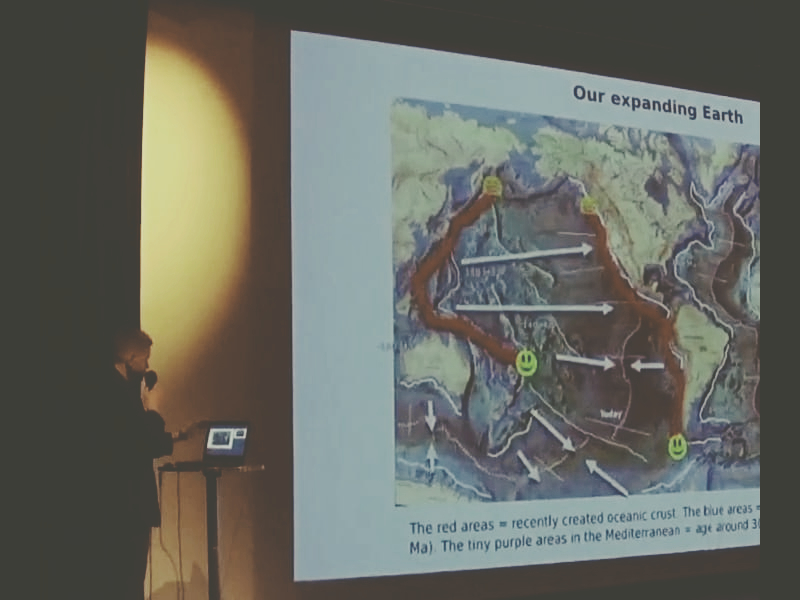
Jan Mestan is also happy to visit you in person and offer a LECTURE on the topic of the Chthonian Planet Earth. He has experience in this field and has previously lectured at institutions such as the Faculty of Science, Charles University, and at the IMAGE Theatre in Prague. The lecture fee is available upon request via email at info@terramakers.com. Travel and, if necessary, accommodation costs are expected to be covered by the hosting party.
We are also able to create EDUCATIONAL MATERIALS for you, such as posters of the expanding Earth. This depends on mutual agreement and specific requirements. Don't hesitate to contact us at the email address mentioned above.
We are proud to offer COSMIC ART by Bogdana in a 110x40 cm format. The price for a painting is approximately 450 EUR (11 000 CZK). The essence of her fluid art and watercolor work is to express the vast complexity of a universe filled with endless colors and unexplored structures. Feel free to reach out to us for more info, or check out Bogdana's Instagram if you'd like to book a KAP session.
Testimonials
WHAT THEY'RE SAYING ABOUT US
Gallery
PHOTOS
Our Supporters
THEY SUPPORTED US ON OUR JOURNEY
Technical University Ostrava
Thank you for the scholarship and the opportunity to pursue studies in applied physics.
Charles University in Prague
Thank you for the opportunity to study Earth sciences, take part in practical courses, and complete a final project in the field of applied seismology.
BAYHOST
Thank you for the financial support and the opportunity to study at Bavarian universities, as well as to explore the connection of continental blocks within the framework of the Earth expansion theory.
Astrophysics Data System
Thank you for the opportunity to archive our research findings.
American Geophysical Union
Thank you for the financial support for our trip from Europe to San Francisco, where we presented our research findings.
European Southern Observatory
Thank you for the financial and educational support, especially for enabling trips from Czechia to France and Chile.
Ludwig Maximilian University of Munich
Thank you for the opportunity to study and consult with experts in plate tectonics.
GFPS
Thank you for the financial support during studies at a university in Bavaria.
Seismik
Thank you for supporting the university project in the field of applied seismology.
Contact
CONTACT US
Location
Prague, Czechia
Email Us
Support Us